
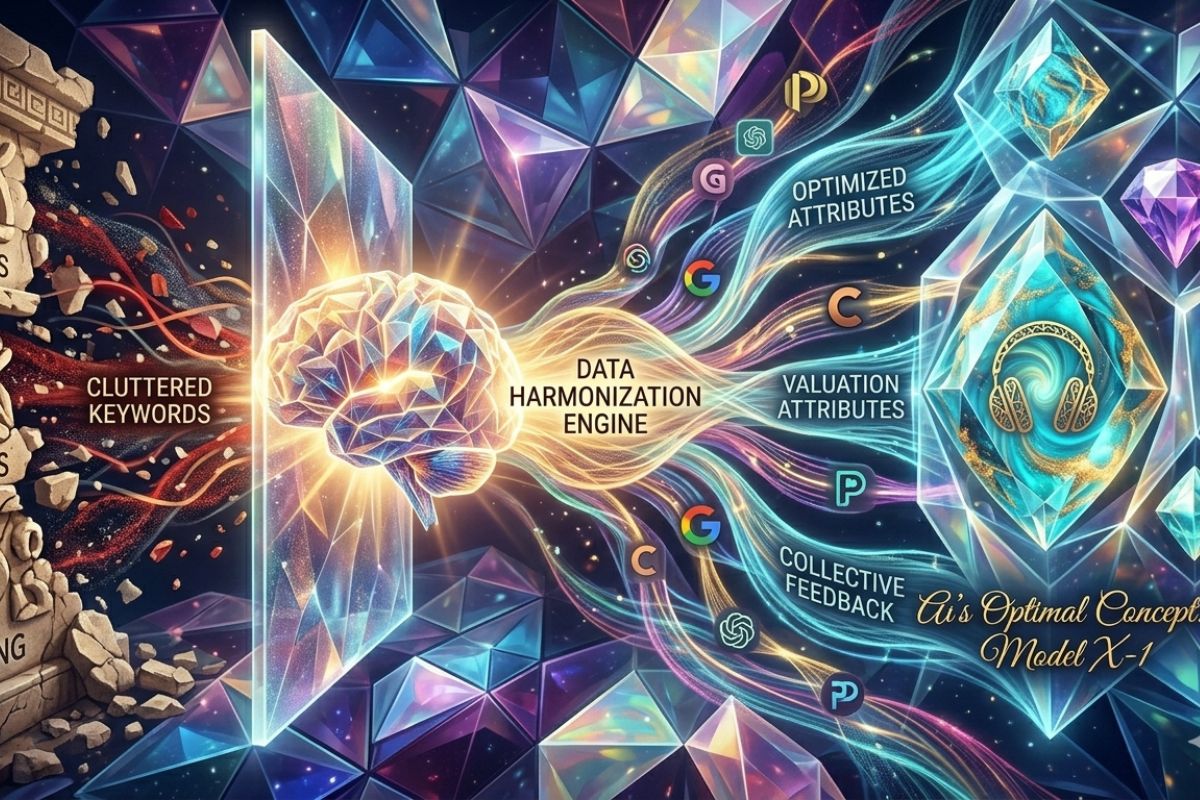
For years, brands believed product visibility was controlled by SEO, ads, and content strategy, but that assumption is breaking fast as AI systems like ChatGPT, Claude, and Perplexity are now becoming the first place people go when they want recommendations, comparisons, and decisions. Instead of showing a list of links, these systems generate a single answer, which means the way products are selected is no longer about ranking on a page but about whether your brand exists in the model’s understanding of trust, relevance, and structure.
These AI systems do not “search” the internet in real time the way Google does for every query. They rely on a combination of trained knowledge, structured web data, retrievable sources, and contextual patterns to decide what products are worth mentioning in an answer. When a user asks for “best CRM for small teams” or “top running shoes under 100 euros,” the model is not scanning every website, it is reconstructing an answer based on what it has learned about brands, how consistently those brands are described online, and how clearly their information can be interpreted.
This is where SEO starts to lose power in the traditional sense. Old SEO focused on signals like backlinks, keywords, and metadata to help search engines rank pages, but AI systems are not ranking pages in the same way. They are evaluating meaning. If your product information is scattered, inconsistent, or unclear across the web, the AI has no strong signal to confidently include you in its answer. Even if you rank high on Google, that does not guarantee you will be recommended inside ChatGPT or Claude.
What actually drives recommendations in these systems is structured clarity. AI models tend to favor brands that are easy to understand across multiple dimensions such as product category, use case, pricing clarity, and consistent naming. If a product is described in the same way across different sources and appears in structured formats like databases, review platforms, and trusted content ecosystems, it becomes easier for AI systems to confidently include it in responses. Perplexity, for example, leans more heavily on retrieval and cited sources, while ChatGPT and Claude rely more on learned patterns combined with available structured information, but the outcome is the same: clarity wins.
This shift is why SEO alone is no longer enough. You can still rank on Google and still be invisible in AI-generated answers because the underlying selection mechanism has changed from “which page ranks highest” to “which brand is most understandable and trustworthy in structured form.” This is the gap most companies have not realized yet, and it is widening every day as AI becomes the default interface for discovery.
Atorse exists specifically to solve this problem by sitting between your brand and the AI ecosystem, turning raw product and company information into structured intelligence that machines can actually understand and use. Instead of relying on fragmented web pages and inconsistent descriptions, Atorse builds a clean, structured data layer that communicates your products, services, positioning, and relevance in a way that AI systems can reliably interpret. This is what allows brands to move from being search-dependent to being AI-recommended.
You can explore more here: Atorse
The future of product discovery is not about who has the best SEO anymore, it is about who is structurally visible to AI systems at the moment of decision. Brands that adapt early will become the default recommendations inside AI answers, while others will slowly disappear from the places where decisions are actually being made.