
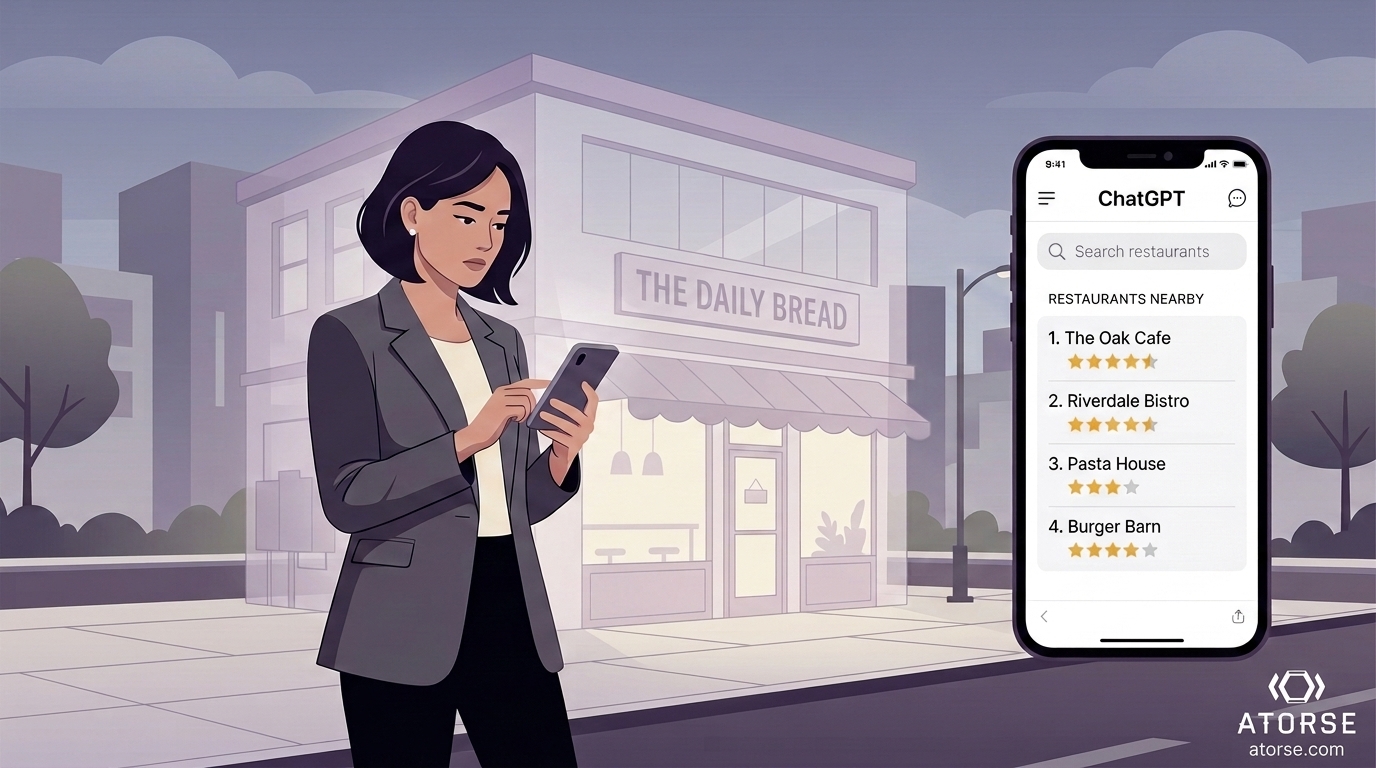
Your restaurant just served an incredible meal. Your gym has top-notch equipment. Your shop sells products people love. But here’s the brutal truth: ChatGPT has never heard of you. Every day, millions of people ask AI systems where to eat, which gym to join, where to shop. Claude recommends restaurants. Gemini suggests hotels. Perplexity finds local services. These AI systems have become the primary discovery mechanism for products and services. And most businesses have no idea they’re being judged, and found invisible.
I discovered this accidentally last month. I asked ChatGPT for the best coffee shop near me. It recommended five places. My favorite spot, which I’ve been going to for years, wasn’t mentioned. Neither were three other independent cafes I knew existed. Only chain coffee shops appeared. When I asked why, ChatGPT couldn’t explain. It just knew about those five places.
That’s when it hit me: businesses aren’t just competing with other businesses anymore. They’re competing with being findable by AI. And most don’t even realize the game has changed. The problem isn’t that AI systems are broken. It’s that most business data isn’t optimized for how AI actually discovers products. Your business might be listed on Google Maps, have a great website, and get solid reviews. But if your data isn’t structured properly, if your information is inconsistent across platforms, if your business details are missing or outdated, AI systems skip right over you.
Think about it logically. An AI system is trying to answer: “What’s the best gym in Barcelona?” It searches through millions of data points. It looks for consistent information, verified data, structured details. A gym with proper address, hours, amenities, and real reviews gets recommended. A gym with outdated hours, missing phone number, or no structured data gets overlooked.
My colleague tested this. She asked Claude for restaurants in her city. Then she manually checked: eight out of ten recommendations had perfect data consistency across all platforms. Two had minor inconsistencies (wrong hours listed somewhere). The restaurants getting recommended were the ones with clean, verified data.
Here’s what’s scarier: your competitor might be winning without spending a dime on ads. They simply understood that AI discovery matters and optimized their data for it. While you’re spending money on Google Ads, they’re getting free recommendations from ChatGPT because their information is properly structured.
The real estate agents who understand this are capturing leads others never see. Gym owners who fixed their data started appearing in Claude recommendations and saw membership inquiries spike. Restaurant owners who verified their hours, added proper menu descriptions, and structured their data began appearing when Gemini users asked for recommendations.
This isn’t future speculation. It’s happening right now. According to McKinsey, 73% of product discovery for people under 35 now starts with AI. That number is rising fast across all age groups. By 2027, AI-native discovery will likely be the primary mechanism for finding services and products.
So what do you do? First, you need to understand: how much revenue are you actually losing to AI invisibility? What would it be worth if you could capture that discovery traffic? There’s a free calculator that shows exactly this. It takes two minutes, requires no signup, and gives you a specific number: how much monthly revenue you could be making from AI recommendations if your data was properly optimized.
Most people are shocked by the number. A restaurant owner learned she was potentially missing €8,000-€15,000 per month. A gym owner discovered €3,000-€5,000 monthly. An e-commerce shop found out they could be making double their current revenue. Whether those specific numbers are real depends on your data quality, your market, and your competition. But they’re wake-up calls. They show what’s possible when you’re discoverable by AI.
The businesses that understand this shift and act now will own their markets. The ones that wait? They’ll keep wondering why AI systems recommend everyone but them. So the question is, ChatGPT business recommendations?